Key takeaways
- Hairline cracks and light fading are cosmetic and can be sealed and refreshed.
- Wide cracks, heaving and loose sections point to base problems.
- Patches can be color matched, but badly broken curbs last longer when replaced.
- Fixing drainage or roots first keeps a new curb from failing the same way.
Read the damage
Hairline cracks are normal in concrete and usually harmless. Chips on corners come from mowers and bumpers. Wide cracks, sections that tilt or sink and curbs that rock when pushed show a base problem. Fading and stains are surface issues.
Photograph problem areas and note when they appear.
Repair options
Cracks can be cleaned and filled with a flexible material. Chips can be rebuilt with patch compound and tinted to match. A sealer evens out color and protects the surface. Good repairs are most visible when done on old, weathered concrete, so blending matters.
Small, frequent repairs can stretch the life of a curb.
When to replace
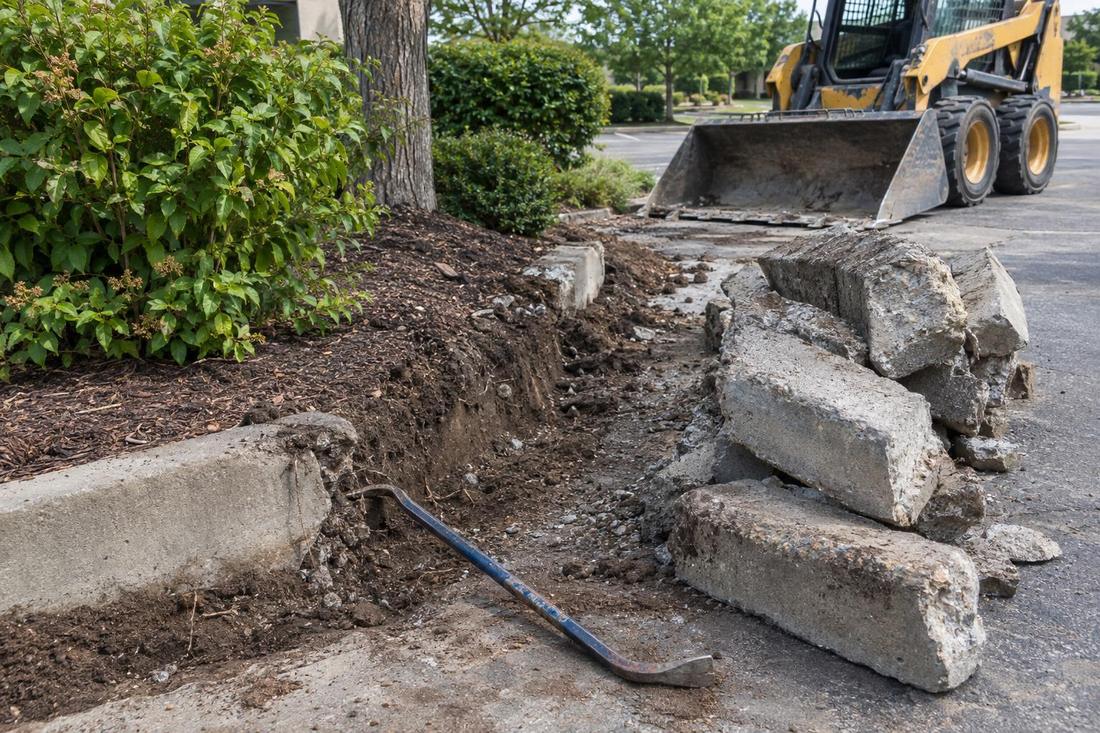
If many sections are broken, if the curb has settled or if the shape is wrong, replacement is the better path. Removal takes out the old concrete, repairs the trench and pours new curb with proper drainage. It is also a chance to improve the design.
Replacing only the failed sections can save effort.
Prevent a repeat
Find out why the curb failed. Roots, poor drainage, weak base and heavy loads are common causes. Fix them as part of the new work. Seal the new curb and keep it clean.
Ask the contractor how they will avoid the original problem.
Official sources and further reading
These are independent organizations. Links open in a new tab.
Quick answers
Are cracks a sign of a bad install?
Not always. Some cracks are normal, and control joints help keep them tidy.
Can an old curb be colored again?
Often yes with stain after cleaning and repairs.