Key takeaways
- Poured concrete curbing is one solid piece, so mulch and grass roots cannot pass through.
- Plastic and thin metal edging are quick, but they can heave in winter and fade in sun.
- Pavers, brick and stone look classic and can be reset, but they need a firm base.
- The right choice depends on the look, the budget, the slope and who will maintain it.
Poured concrete curbing
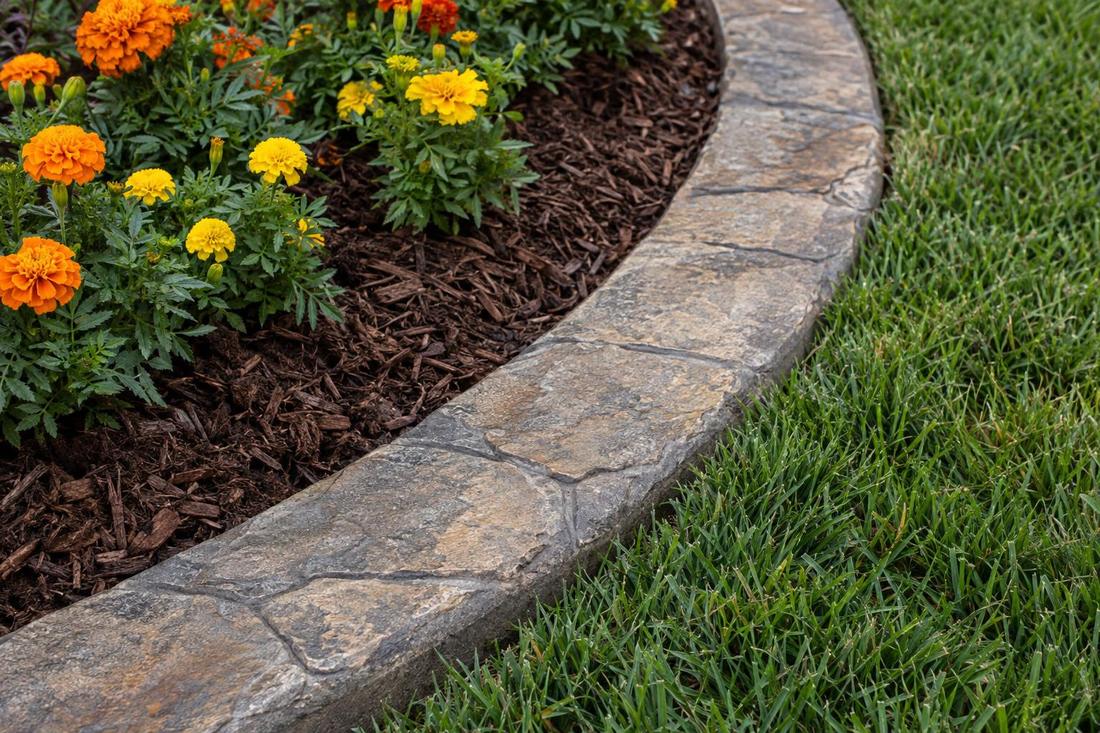
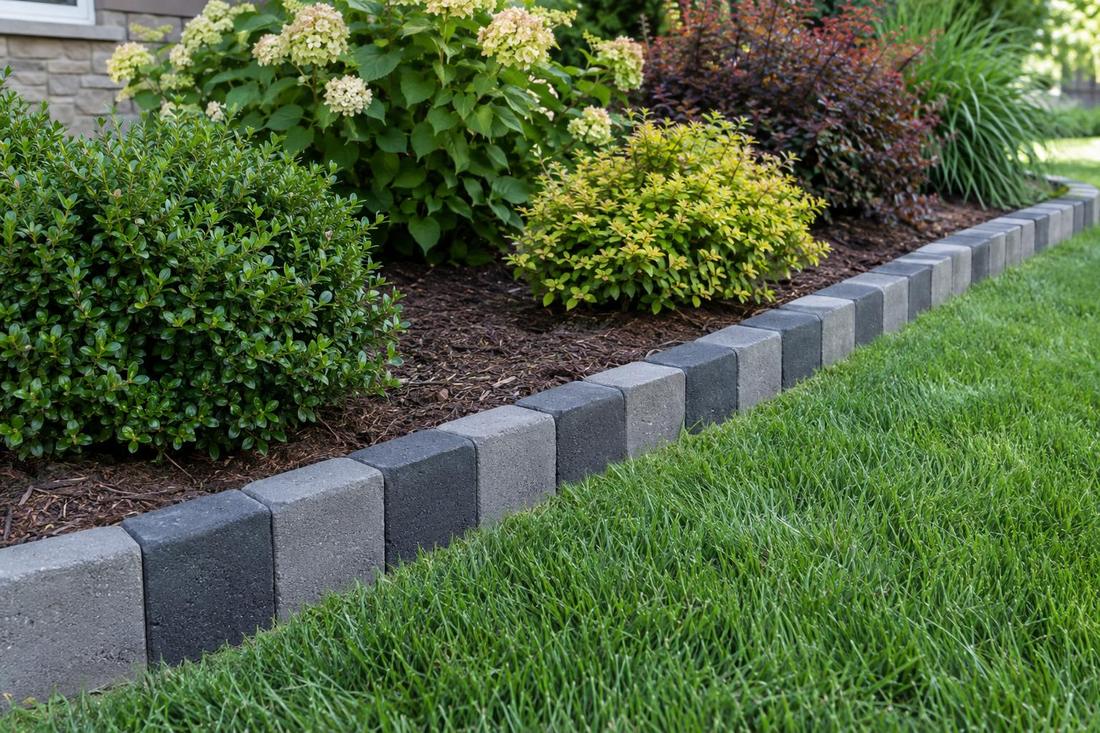
A curbing machine pours a continuous ribbon of concrete into a prepared trench. It can be stamped, colored and shaped into curves and rings. Because it is one piece, it blocks roots and holds mulch in. It is permanent, so layout matters, and repairs are patching or replacing sections.
It suits owners who want a lasting, low-maintenance border.
Plastic and metal edging
Plastic edging is quick and easy to install, but it can heave in frost, warp in heat and show gaps. Steel and aluminum are cleaner and stronger, with a thin, modern line that bends around curves. Both can be moved or removed more easily than concrete.
They suit modern designs, tight budgets and beds that may change.
Pavers, brick and stone
Units like pavers, brick and stone give a classic, handmade look and can be taken up and reset. They need a compacted base and an edge restraint, and joints let some weeds and roots through. They suit traditional homes and cottage gardens.
Natural stone adds a rustic feel but takes more time to fit.
Timber and rock
Timber is warm and easy to shape but wears out in time. River rock and gravel borders are good along foundations for drainage, though they need a firm edge to stay in place.
Many yards combine two or more edges for different areas.
Official sources and further reading
- American Society of Landscape Architects
- National Association of Landscape Professionals
- University of Tennessee Extension
These are independent organizations. Links open in a new tab.
Quick answers
Which edge lasts longest?
Properly installed poured concrete and well-set stone last the longest. Plastic and timber wear out sooner.
Can I mix materials?
Yes. Many yards use concrete for front beds and steel or stone in back gardens.