Key takeaways
- Layout comes first, and you should approve the line before any concrete is poured.
- The trench and base decide how long the curb will last.
- A curbing machine forms the ribbon, and hand tools finish corners and ends.
- Curing and sealing protect the finish, and you should wait before adding mulch and weight.
Layout
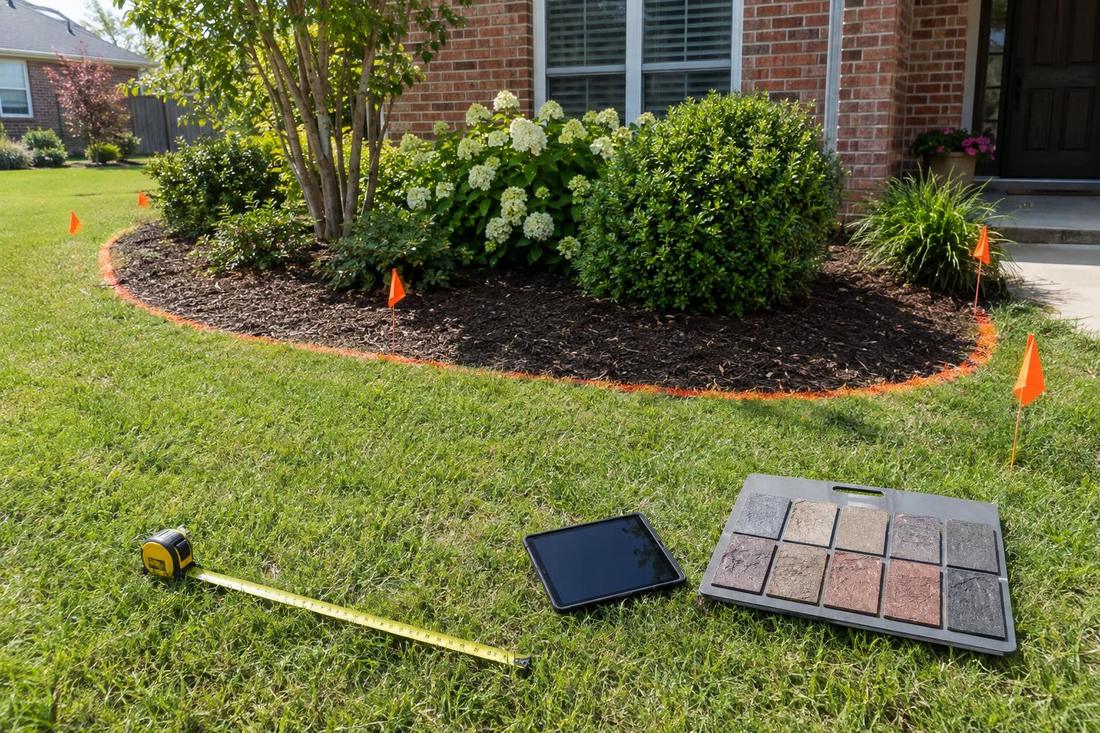
The crew marks the shape with paint, a hose or stakes and string. You walk the line, check the curves and ask for changes. Utility locates are called in before digging, and plants or irrigation heads near the line are noted.
Do not skip this step. Moving a curb after it is poured is hard.
Trench and base
A shallow trench is cut along the line, and loose soil is removed. In soft areas, stone may be added and compacted. The trench is cleaned so concrete bonds to a firm base. Drainage gaps and cut lines are planned.
Roots are cut cleanly or avoided where possible.
Pouring and forming
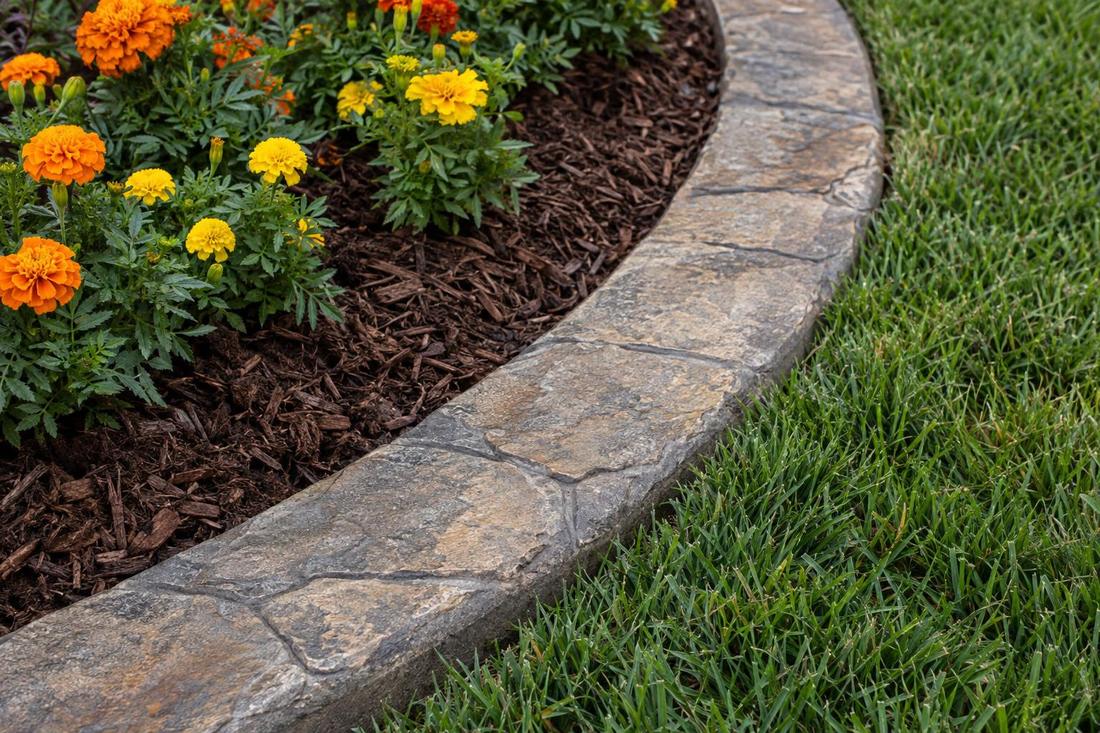
A curbing machine feeds a stiff concrete mix through a mold, forming a continuous ribbon along the line. Color is mixed in, and release powder and stamps are applied while the surface is workable. Corners, ends and tight curves are hand-tooled.
Control joints are cut so any movement stays neat.
Curing, sealing and cleanup
The curb cures for several days and is protected from rain and traffic. A sealer is applied to deepen color and protect the surface. The crew backfills beside the curb, cleans up and explains care.
Mulch, soil and mowing can usually resume after the curb has cured, and your contractor will tell you when.
Official sources and further reading
These are independent organizations. Links open in a new tab.
Quick answers
How long before I can mow beside it?
Usually after a few days of curing. Your contractor will give you a date.
Does weather matter?
Yes. Rain, extreme heat and freezing can affect the pour, so work is scheduled around the forecast.