Key takeaways
- Wide beds with gentle curves look more natural than narrow strips with sharp corners.
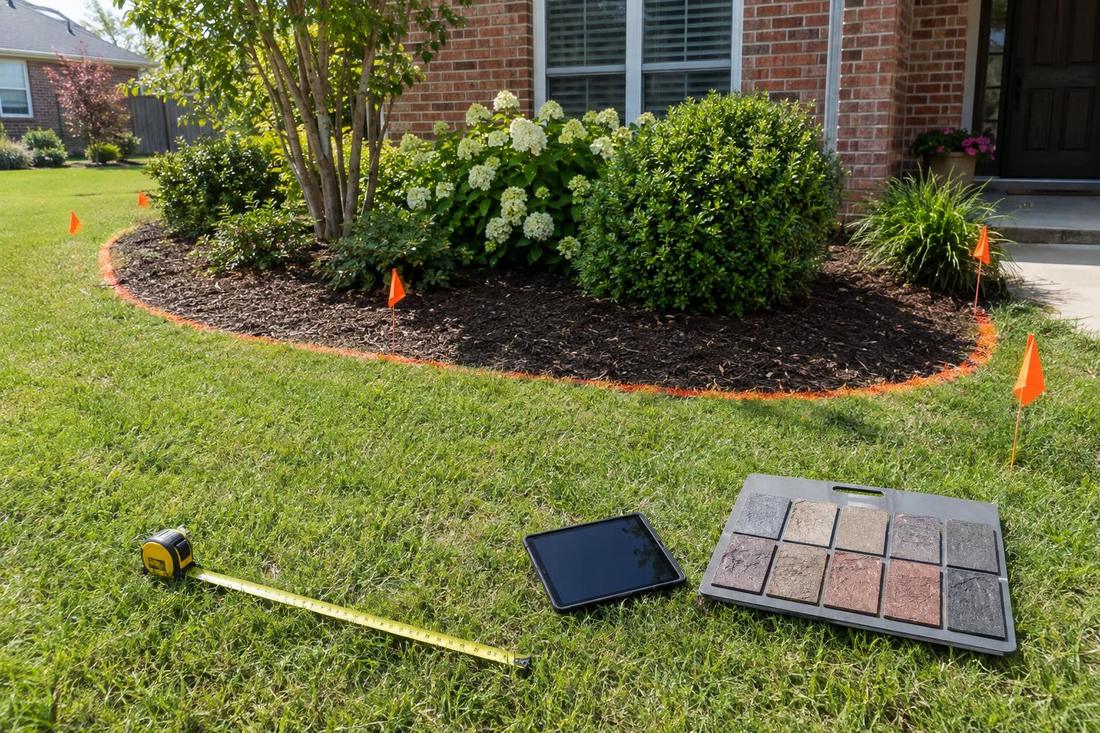
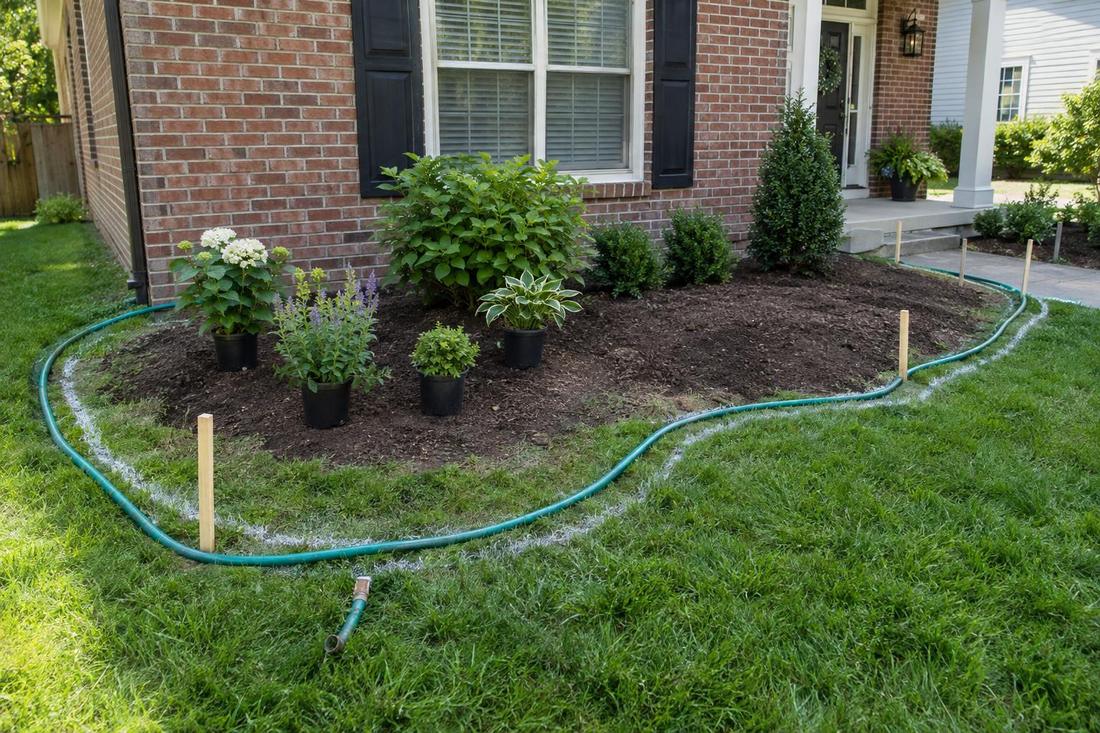
- Lay the shape out with a hose or paint and live with it for a day before you pour.
- Keep curves smooth enough for a mower and for the curbing machine to follow.
- Plan drainage, lighting and irrigation before the curb goes in.
Think in shapes
Gentle, sweeping curves are easy to mow and look natural. Tight curves and sharp points are harder to maintain. Beds that echo the lines of the house, such as a curve that follows a porch, feel designed. Leave room for walkways and for plants to grow to their mature size.
Stand back at the street to judge the shape.
Size and depth
Many front beds work well at four to eight feet deep so plants can be layered. Narrow beds make plants look crowded. Large lawns often benefit from island beds that break up open space. Keep plants away from foundations and walls enough to allow air flow.
Wider beds also use more mulch and need more care.
Drainage and slope
Water should flow away from the house and out of beds. A curb can dam water if it has no gaps, so planned openings and swales matter. On slopes, stepped curbs and terraces hold soil. Check where downspouts discharge before drawing beds.
A good layout also leaves access for utilities.
Lighting and irrigation
Conduit for lights and sleeves for irrigation lines are easiest to place before concrete is poured. Planning them now avoids cutting a finished curb later.
Talk to your contractor about sleeves under curbs and walks.
Official sources and further reading
- American Society of Landscape Architects
- National Association of Landscape Professionals
- University of Tennessee Extension
These are independent organizations. Links open in a new tab.
Quick answers
How do I test a shape?
Lay a garden hose in the shape, look from the street and indoors, and adjust until it feels right.
Can I change the bed later?
You can, but concrete is permanent, so settle the shape before pouring.