Key takeaways
- Low-voltage lighting is safe, efficient and easy to adjust.
- Place sleeves for cable before the curb is poured.
- Aim lights to avoid glare for guests and neighbors.
- Use timers or photocells so lights turn on and off on their own.
Types of lights
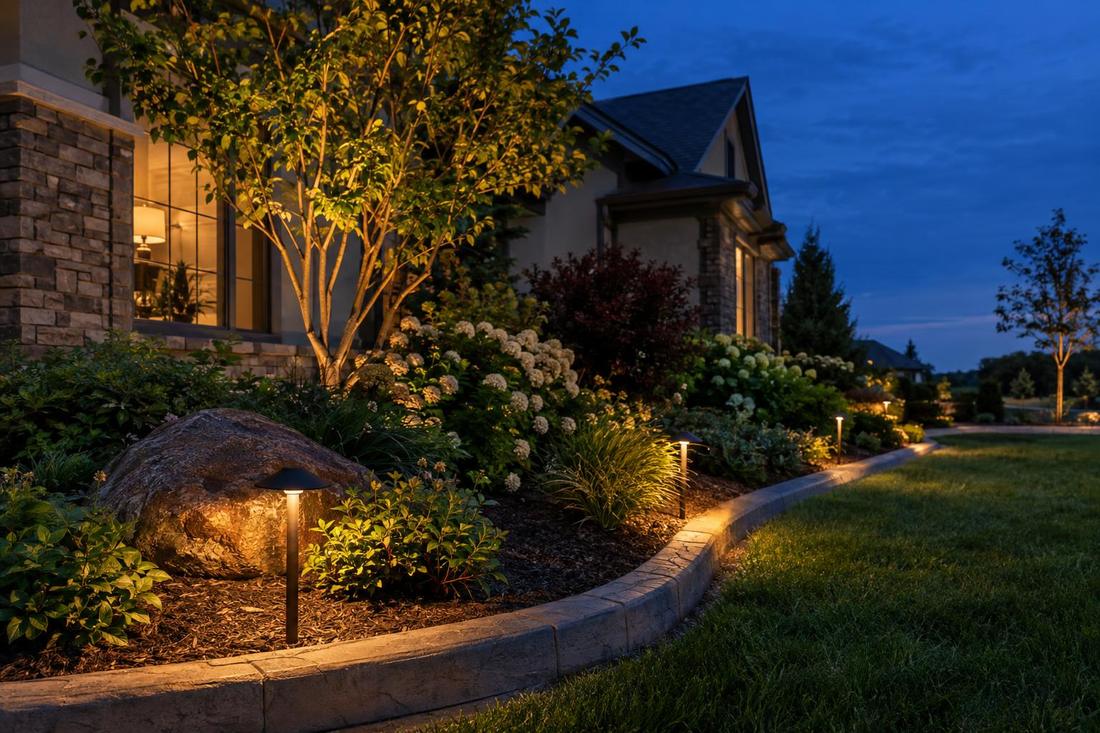
Path lights mark walkways and borders, wash lights grade a wall or curb with soft light, uplights show off trees and shrubs and small recessed lights can be built into steps and walls. Warm white LEDs suit most homes.
Choose fixtures with good finishes for the weather.
Planning with the curb
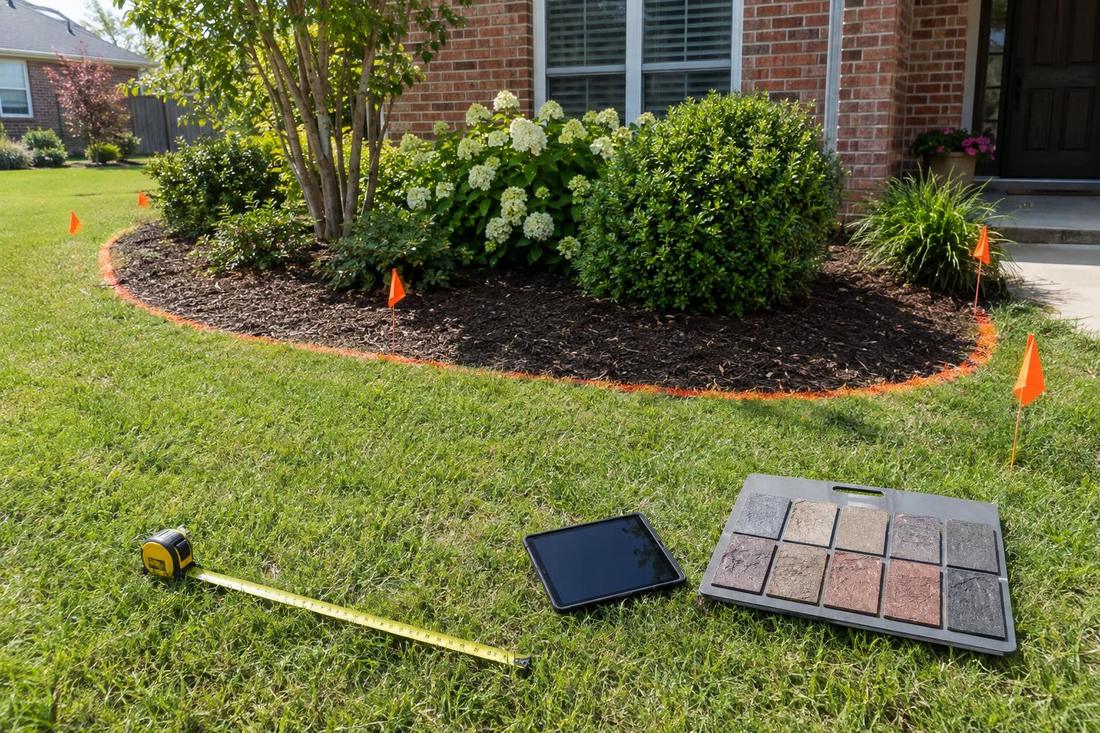
Sleeves under or beside the curb let cable pass without cutting the concrete. Transformer locations should be near an outlet and out of sight. Mark fixture spots on the layout so curbs and beds work with them.
Leave a few extra sleeves for future changes.
Aim and control
Aim fixtures so the light shines on plants and surfaces, not into windows or eyes. Dimmers, timers and photocells give flexibility. Smart controllers can run schedules from a phone.
Walk the yard at night after installation and adjust.
Safety and power
Low-voltage systems are safer than line-voltage lights but still need a safe power source. A qualified electrician should supply the outlet or power to the transformer. Keep cable buried and protected from trimmers.
Call 811 before digging.
Official sources and further reading
- Tennessee 811
- National Association of Landscape Professionals
- American Society of Landscape Architects
These are independent organizations. Links open in a new tab.
Quick answers
Can I add lights after the curb is poured?
Yes, though cutting or trenching beside the curb is more work than planning sleeves.
How many lights do I need?
It depends on the length and the effect you want. A plan helps avoid too many or too few.