Key takeaways
- Pick a pattern that echoes the home: brick for brick houses, slate or ledge stone for stone.
- Integral color goes all the way through, while stains and release powders add depth on the surface.
- Warm tans and grays blend with most homes, and darker colors give contrast.
- A good sealer deepens the color and protects the surface.
Patterns
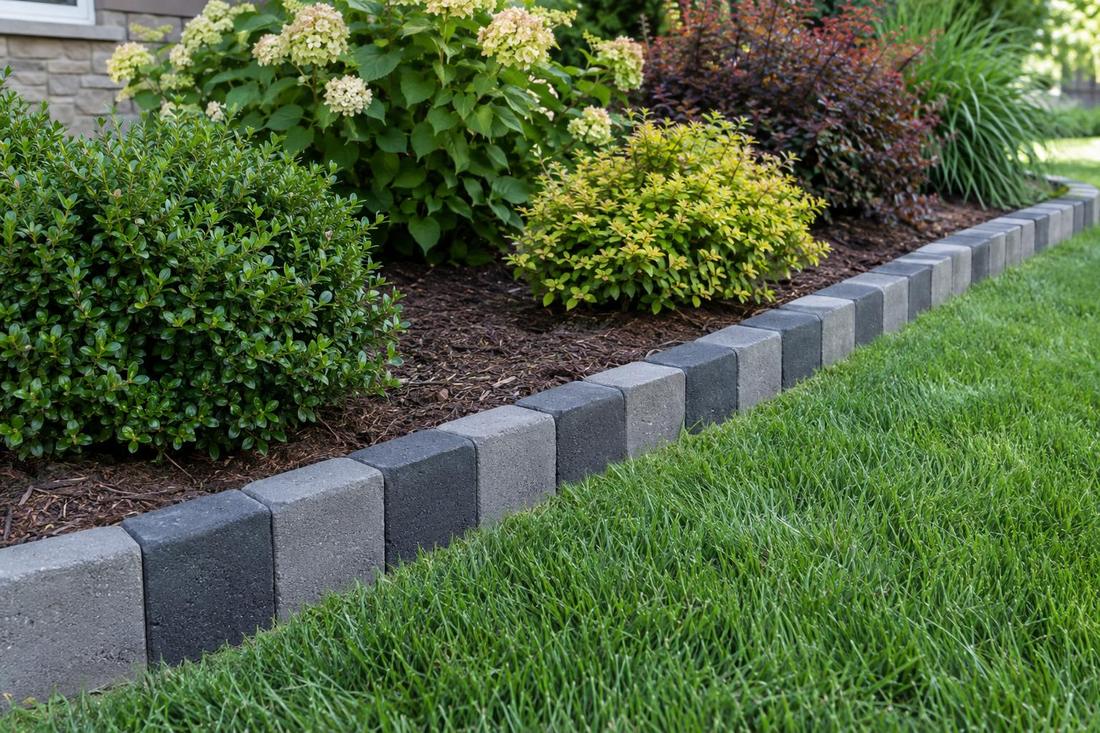
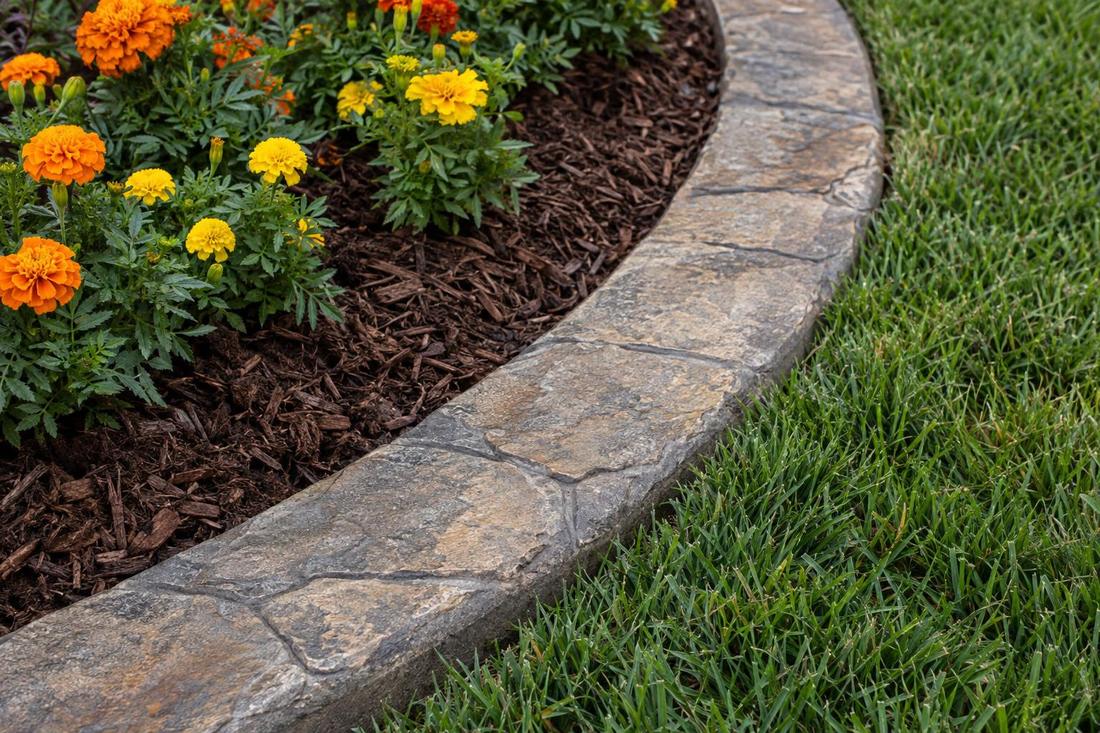
Smooth curbs have a clean, modern profile. Brick patterns look like running bond or herringbone. Cobblestone is rounded and traditional. Ashlar slate and flagstone are flatter and more natural. Scalloped curbs have a decorative rolled edge. Each can be used alone or combined along different sections.
Choose a pattern that relates to a material already on the house.
Colors
Integral color is mixed through the concrete, so chips do not reveal a different color. A color release powder adds a second tone and gives stamped curbs a natural look. Stains can be layered or used to refresh old curbs. Colors that sit between the house and the mulch usually look best.
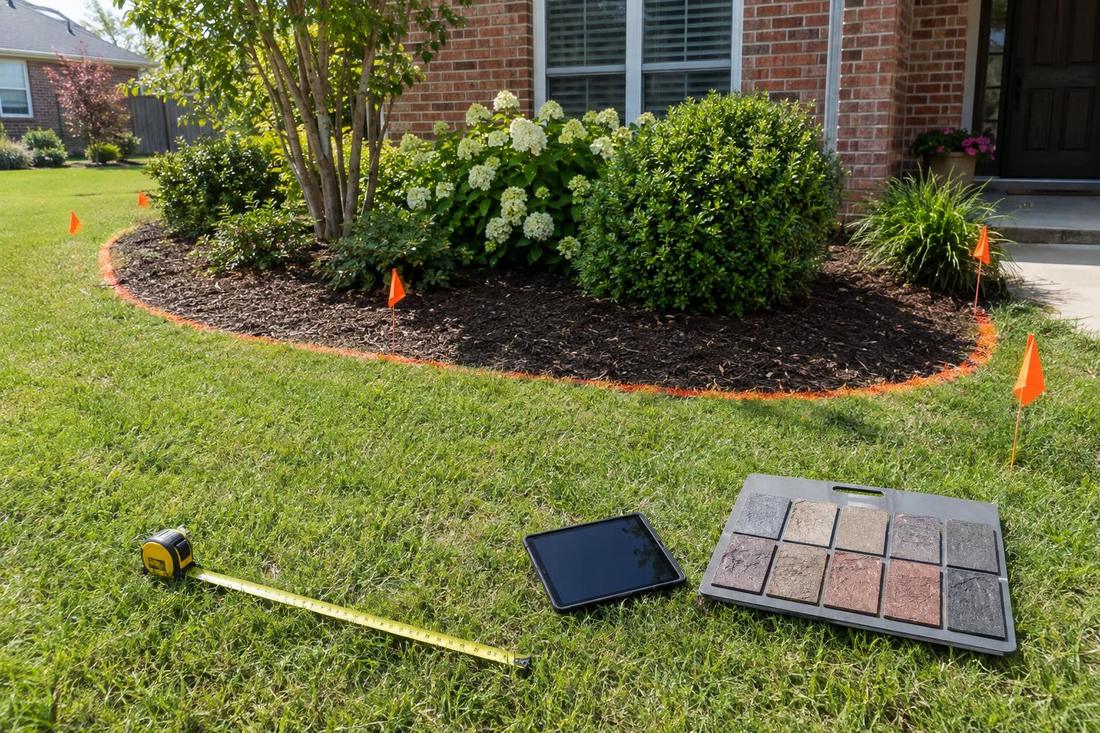
Look at samples outside, in sun and shade.
Sealers
A sealer protects against moisture, stains and sun. Matte sealers keep a natural look, while gloss sealers deepen color. Walking surfaces need a slip-resistant additive. Resealing keeps the color rich.
Ask your contractor which sealer they use and how often to reapply.
Matching the neighborhood
Some neighborhoods and historic districts have guidelines on materials and color. Showing a sample and sketch to the board before work starts avoids surprises. Neutral tones are the easiest to approve.
Photos of similar completed curbing help the review.
Official sources and further reading
These are independent organizations. Links open in a new tab.
Quick answers
Is stamped curbing slippery?
Textured curbs grip well, and a slip-resistant sealer keeps them safe.
Can I change color later?
Often yes with stain after cleaning, though going much lighter is hard.