Key takeaways
- A solid curb can trap water in a bed unless it has gaps or the bed slopes away.
- Water should leave beds toward lawns, swales or drains and not toward the house.
- Downspouts need somewhere to discharge before beds are curbed.
- Small drainage gaps, swales and dry creek beds solve most problems.
How water moves
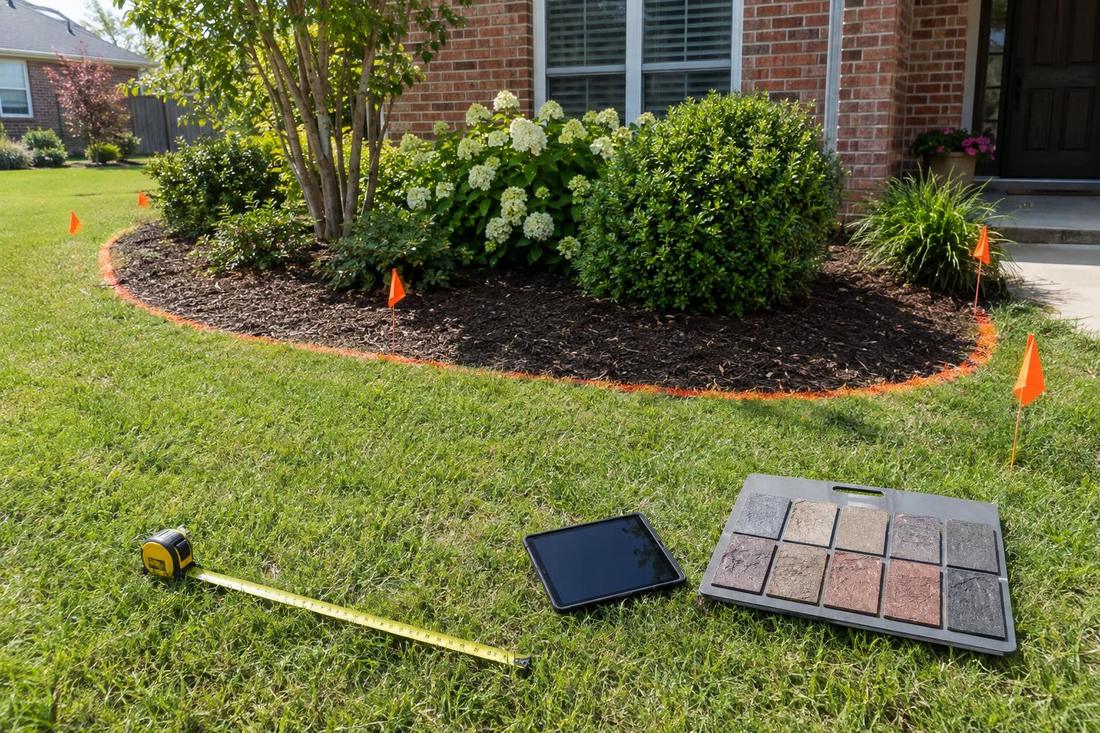
Rain falls on roofs, drives and lawns and flows downhill. Beds sit in its path. A curb that blocks the flow without an exit forms a dam, and the bed floods. Planning the exits is part of the design.
Look at the yard after a heavy rain to see where water goes.
Gaps and slopes
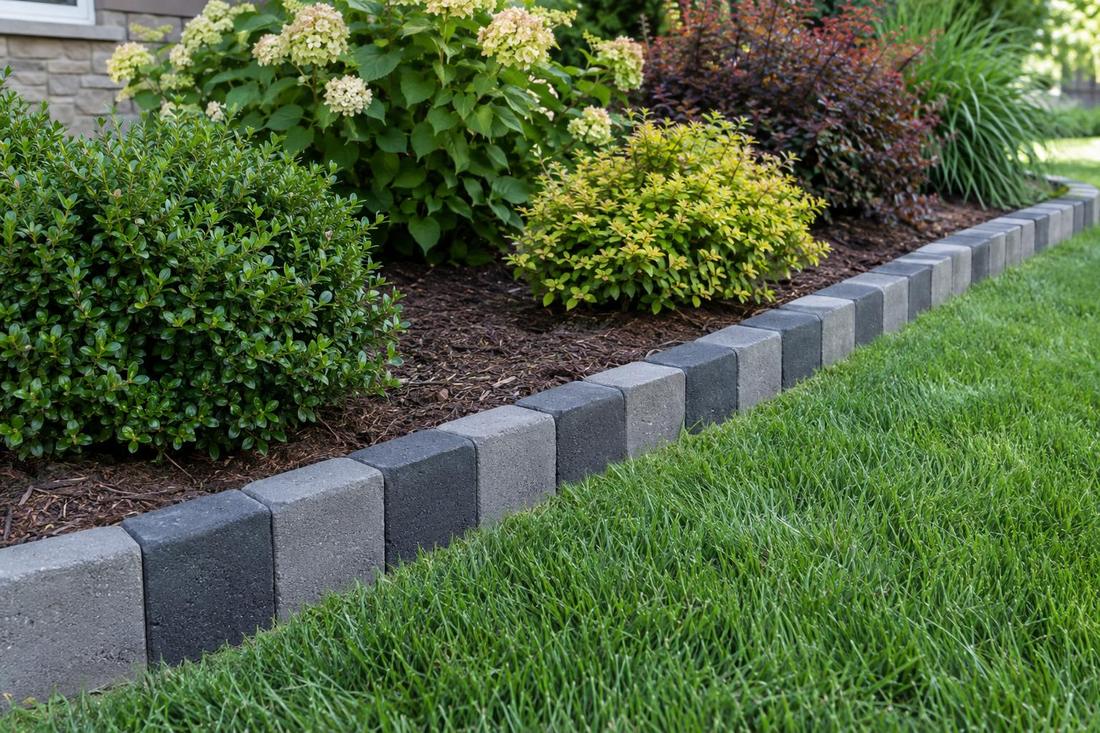
Small notches in the curb let water pass, and grading beds to slope slightly toward them keeps them from pooling. Mulch should stay below the curb top so it is not carried out. In planted beds, plants and soil absorb a lot of rain.
Mark gap locations when you walk the layout.
Downspouts and swales
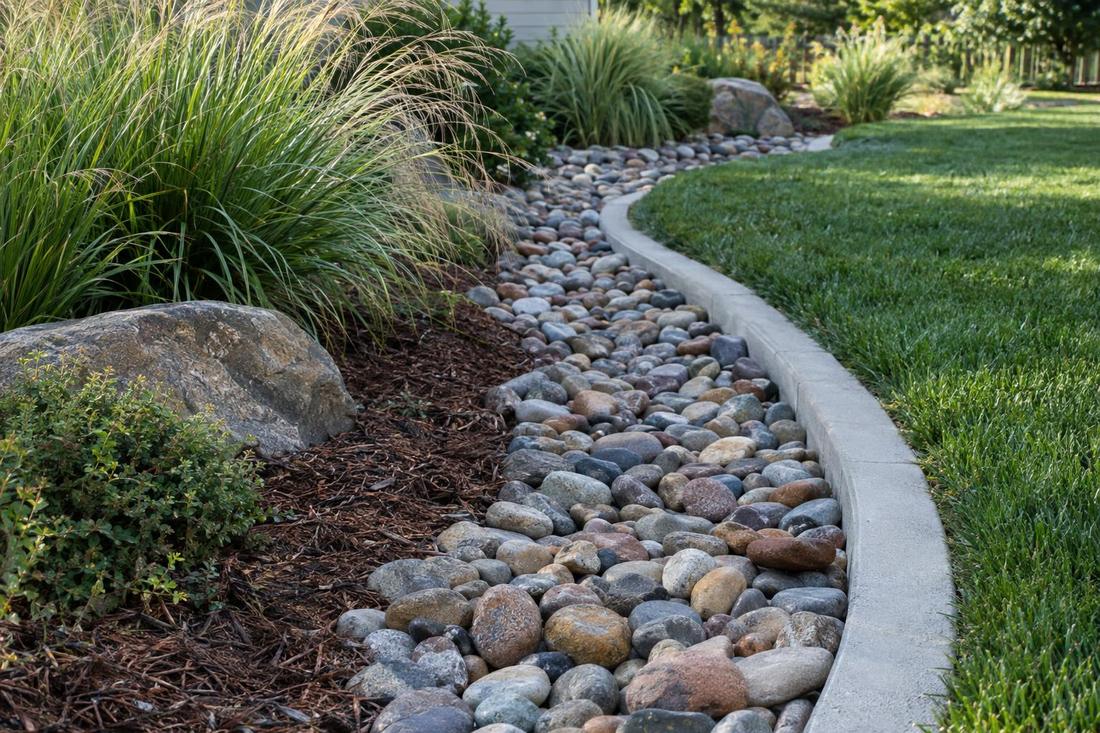
Downspouts can be piped to the street, a drain or a swale instead of emptying into a bed. A shaped swale or dry creek bed carries water gently across the yard. Stone lining slows flow and prevents erosion.
Avoid sending water toward neighbors.
Slopes and retaining
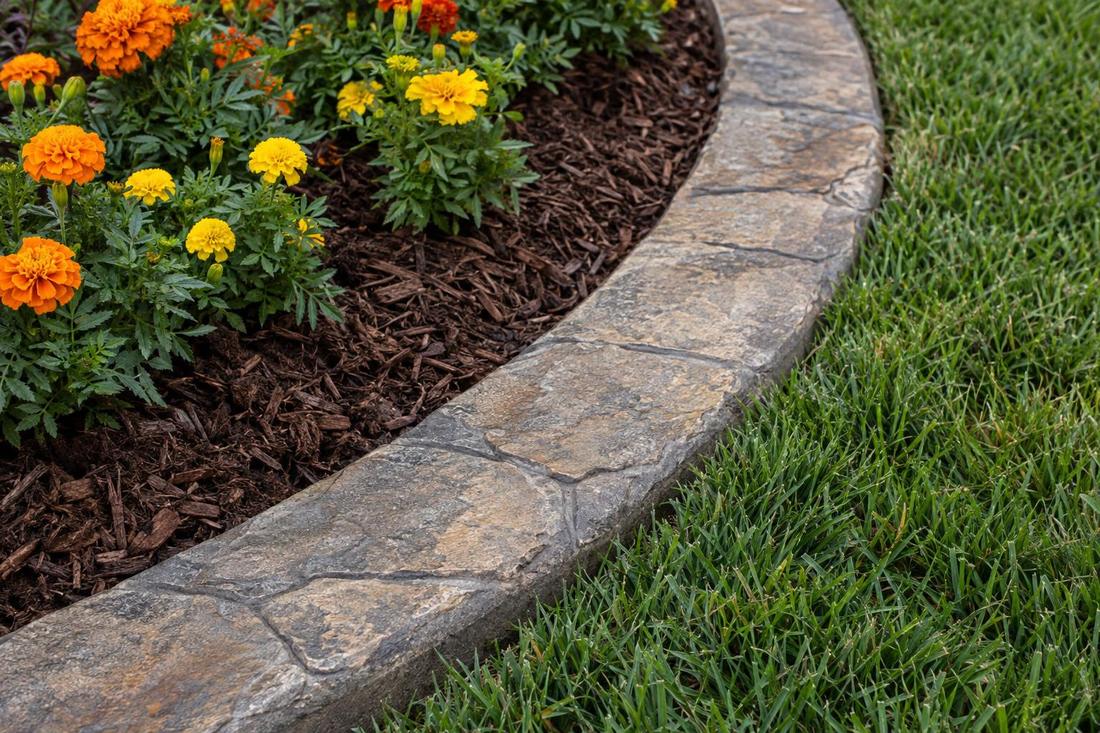
On slopes, curbs can step down to hold soil, and low walls retain more. Taller banks need engineered retaining walls. Erosion control, such as mulch and plants, helps while new work establishes.
Ask your contractor about the plan for storm runoff during construction.
Official sources and further reading
- Tennessee Department of Environment and Conservation
- University of Tennessee Extension
- EPA WaterSense outdoor water use
These are independent organizations. Links open in a new tab.
Quick answers
Will a curb cause flooding?
Not if it is planned with exits for water. We design gaps and slopes.
Can curbs be used along a slope?
Low curbs can help on gentle slopes. Steeper banks need a retaining wall.